Tuesday, December 29, 2020

 The Job of a Toddler part three

Getting what they want

Toddlers are experts at trying to get what they want.  

While I have never agreed with the term "terrible two's", I fully agree with the term "tenacious three's" but have also met many tenacious two's and even one's. 

One of the most important lessons learned during the toddler years is "how to get what I want". Toddlers will try many tactics to get what they want and the lessons they learn all depend on how parents and caregivers respond to the tactics used.  

I just spent time with a very tired three year old who didn't want to sleep. I know this child well and know that a skipped nap could end in a very unpleasant evening for her family. She employed all the typical moves, she got up and used the bathroom twice, she argued that she wasn't tired, that she was hungry and thirsty, that her clothes hurt, and on and on.  I continued to assure her that she would be ok if she waited for after nap snack because she had JUST eaten a big lunch, that her clothes were bothering her because she was tired and on and on. While it can be very frustrating watching her fight sleep, I know that she needs a nap and she needs me to allow her to test and not give in.  

Keeping a calm demeanor while dealing with a testing toddler is not easy but is very important.  If possible, tag team with one parent or caregiver switching with another when needed. This sends the message that everyone is on the same page and models cooperative behavior. 

Don't ever hesitate to say "I'm feeling frustrated right now and need to take a break, I'll be back in a few minutes to help you some more". Then go into another room and do whatever works for you to remain or regain your calm.  By doing so you let them know that you are not going to give up just because you are frustrated and also show that it is ok to be frustrated and to take a minute when needed. 

Many toddlers will at some point try the tantrum method of getting what they want.  I know that there is a lot of conflicting advice out there about tantrums and I always say to go with what feels right for you and works for your family. My advice is to acknowledge how they are feeling, restate why they can't get what they want and go on with your day. Remember, they can't always get what they want and they have the right to be upset about that.  

Here we see my granddaughter showing my entire extended family at a Christmas party how upset she was that she couldn't have what she wanted. 


And now her reaction when she realized a room full of people were going to let her express her feelings, but were not going to give her what she wanted. 

I recommend only paying attention to a tantrum if they are throwing things or doing something else that could hurt someone.  As with all toddler behavior, acknowledge how they feel with statements like " I know you really wanted a blue cup but all the blue cups are being used", or whatever is fueling the tantrum and then let them be. They will soon learn that tantrums don't work, it may take a few tantrums before they are sure that you won't give in, but if you are consistent, they will learn that this is not an effective way to get what they want.   

The most important thing to keep in mind is that it's ok for your child to have strong negative emotions, it is not your job to keep them happy all the time.  Despite what they may say, what they need most from you is to know that you are in charge, you can and will make the big decisions and you will love them no matter how hard they push and test.  
Always remember that the safer, more loved they feel, the harder they will test you.  So the next time your toddler melts down in public and you feel everyone's eyes on you, remember that what they think is not important, your child seeing you be strong in the face of their emotions is. 


Tuesday, December 22, 2020

The Job of a Toddler part two


In my last blog I wrote about toddlers and how they test in their interactions with other children.  Today I will talk briefly about how they may test you at home.

Hitting

Every toddler I know at one point tested their parents by hitting them.  It can be quite a shock the first time your sweet baby hits you and you do not know how to react.  My advice is to always react naturally, when someone hits you, it hurts.  Tell your toddler that it hurts you, make a sad face, say “ouch” whatever feels natural to you and gets the point across that it hurts (even if it does not really hurt.) If you are holding them and they repeatedly hit you, put them down, tell them that you will not allow them to hurt you and if they are going to hit, you will not hold them.

If they are hitting siblings, tell them that you will not allow them to hurt their brother/sister and if they want to play with them, they need to not hit, otherwise they will have to play by themselves.  This is a natural consequence, and the important thing is to ALWAYS remain calm and to say this in a calm, matter of fact way.  With some children you will only need to move them a few feet away, with other children you might need to use a play pen or a room with a gate.  Try not to make going into the play pen or other room seem like punishment.   Instead, it is just what needs to be done to keep others safe and always allow them to rejoin the group as soon as they are calm and ready.  Do not put them in for any set amount of time. 

Setting a timer for a set amount of time for them to “think” is punishment, allowing them to tell you when they are ready is discipline.  One is intended to punish, the other to teach.

Climbing

Imagine the joy of learning that you can climb onto all sorts of surfaces you had thought were out of our reach.

 It is like if you as an adult woke up one morning with the power to jump really high, I’m pretty sure most of you would test that power out and visit the tops of nearby buildings.

There is a good chance your toddler will try to climb on shelves, dressers, tables, and the list goes on.  This is an instance in which I have found that how we word things really makes a difference.  Instead of saying “NO” or “don’t climb” say “that’s to high”, “that’s not safe” or “keep your feet on the floor”, or stool or whatever they are allowed to climb/stand on.  If you walk into a room and find them on a table, show concern and say, “Please get down, that is not safe” and then talk about the surfaces they might hit if they fell off the table.  If you have a stool that you let them stand on to help in the kitchen, but they keep using it to climb onto the counter, tell them that it is not safe and if they continue, you will have to take it out of the room, and they will not be able to help you.  The important thing is to do it if you say it and while your toddler may cry for a day while they watch you cook without them, the next day they will probably not climb back up and if they do, take the stool away for another day.  

 As with hitting, biting, throwing and all the other many experiments your toddler is going to engage in, consistency in your reaction will make a difference and will allow them to learn what is acceptable and what is not. 

If you establish the rules, explain the consequences of not stopping the behavior, consistently enforce those consequences, acknowledge how everyone in the situation feels and try to keep calm, you will get through this.

Some examples of how to phrase things are

·         I know its frustrating that you can’t climb on the counter but It’s not safe and I worry you will get hurt.

·         I won’t allow you to hurt me, I know you are frustrated but hitting is not ok.

Toddlerhood is full of challenges, but it is also full of joy, one day you will look back on these days and smile.

Just remember the big 3 C’s

Calm, consistent and caring.  


Friday, December 18, 2020


The Job of a Toddler


I remember when I had my first toddler class back in the 1990’s.  One girl entered my class as a sweet agreeable toddler who had just turned one and was just starting to walk. In less than a month her mom was asking me “what happened to my sweet baby?”

Between the ages of one and four, children experience many changes, they learn to walk and talk and most importantly, they learn that they have power.

They have the power to express how they feel, they have the power to get what they want, they have so much power that they did not know they had before. 

Imagine you woke up one morning and discovered that you had a superpower, you would spend some time learning about your power, you would want to learn when and how to use it, how to control it, and just how far you could push it. In your attempts to understand and control your power, you might hurt other people; you might knock someone over as you fly by fast or startle someone as you run past.  You are not meaning to hurt them; you are not being mean; you are just not experienced enough with your powers to safely use them.  That is basically what a toddler is doing in those amazing and challenging toddler years.

This happens at different times for each child, just as all stages of development do.  I have known one-year olds who start testing boundaries and other children who do not start this until they are three.  No matter when they start, it is an important part of their development.  

They need to test the boundaries; they need to find out what happens when they take a toy from a friend or even when they knock another child down.  This is how they learn to use and control the power they have.  Some children push and test these boundaries for a short period and others will keep at it for months. 

This is one of the reasons why strong relationships with care givers is important.  Children need to know that they can push and push and test and test and still be loved and valued by their caregivers. Often the safer, more secure they feel, the harder they will test and push the boundaries. 

The important thing for parents and caregivers to remember during these times is that your child is not turning into a spoiled little sociopath and this behavior will not last forever.  It is also important to be consistent in how you respond to this behavior. 

I have found that the best strategy is to acknowledge how everyone in any given situation is feeling.  I recently had a two-year-old take a toy from a one-year-old.  The one-year-old cried for a few seconds and then went on to play with something else.  After watching to make sure the situation did not develop into a physical fight for the toy, I talked to the older child about what happened and about how the other child probably felt.  I did not force him to give the toy back, the other child had already moved on, I did not tell him that it was mean to take the toy, because he was not being mean, he was being two.  I helped him to understand how his action made the other child feel.  Will he take another toy, probably, will we have the same conversation twenty more time, probably? But if we consistently help him to understand the consequences of his actions, he will learn. 

There are many ways in which young children will test the boundaries, as long as you stay calm, stay consistent and talk to them, you will make it through and more than likely your sweet baby will come back as a sweet child. 


Tuesday, November 10, 2020

Mixed ages, it's only natural

One of the most unique things about Birdsall House is our mixed age group setting.  In a home, children are not usually born in litters and the younger ones learn from the older ones. Yet for some reason the traditional early childhood setting separates children by age. When you do find a program that has mixed ages groups they separate the infants and toddlers from the older children, in fact in Missouri if you have more than 20 children in your care, you have to have a floor to ceiling wall between these groups. When I found this out I was very disappointed and decided the benefits of mixed ages was so great that we will keep all our centers at 20 children or less.   

Here are the reasons I feel so strongly about letting our infants and toddlers interact with our 3,4, 5 year old's and more. 

Children learn by observing and mimicking, if children are only with children their age, they will not be inspired as much as if they are with older children. 

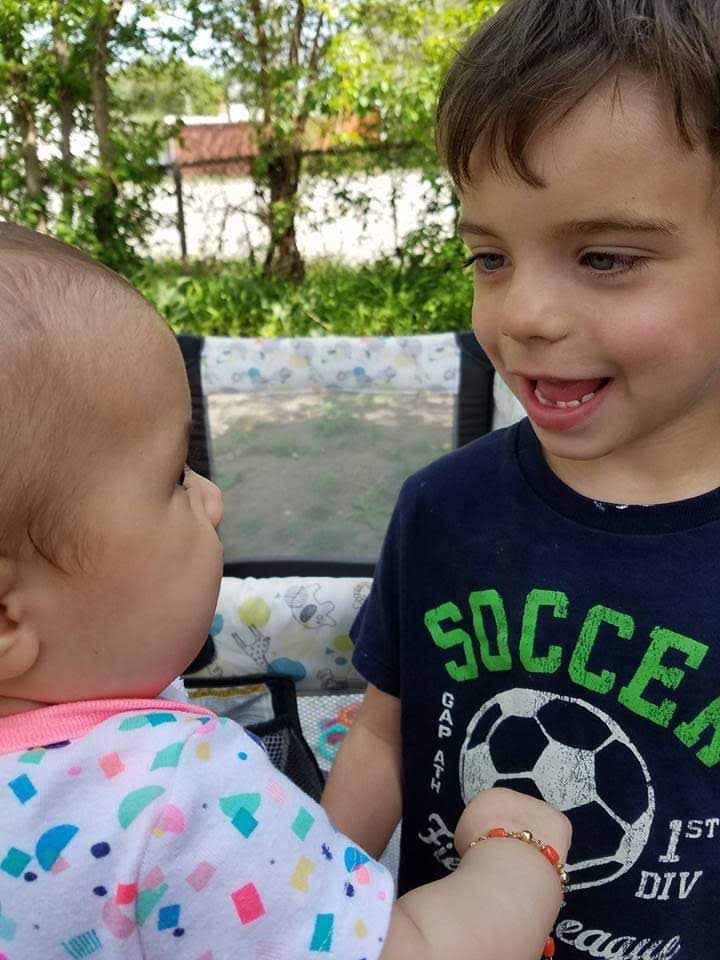
Here we see a two year old being inspired to challenge himself by watching his 7 year old brother. 


Children develop a sense of family with their fellow students and the older children get the opportunity to mentor and take a leadership role. 


Children do not feel pressure to achieve a skill or reach a milestone.  Everyone is at a different place in their development. The children accept each other for where they are and encourage each other when they try something new.  

There is no better way to interest a child in learning than for them to see their bigger friends doing it. 


Not only do the children learn from and teach each other, they also stay with the same group of teachers from infancy to when they leave for elementary school. 

I can't imagine going back to teaching in a single aged classroom, I see no benefit to it and would miss seeing magical interactions like this. 


Monday, October 12, 2020

Not STEM, not STEAM but STREAM!!

 You hear a lot of talk about STEM education and about STEAM, I'm personally glad they added the A for arts because art is a great learning tool but neither of those are appropriate for early childhood for a couple of reasons. 

First, children are natural scientist, engineer's, artist and inventors, all we need to do is give them the freedom to do so. So STEAM in early childhood should be naturally happening. 

Second, what is needed most in early childhood is relationships.  

Here at Birdsall House we let the STEAM happen naturally and we add the R to make STREAM through consistency in staffing and fostering respectful relationships from infancy on.  

By modeling caring respectful interactions we teach the children how to have caring respectful interactions, themselves.

I remember watching one of our students who was three at the time playing with a one year old.  She was using a blanket to cover and uncover the one year old and each time she would stop and say "did you like that? Do you want me to do that again?" which was met with a giggle indicating "yes". 


Not only are the relationships between the children important but also the relationship between child and staff really matter.  When children feel safe with and loved by their caregiver, they feel free to experiment and explore, which leads to learning. 

There is one negative to building these strong relationship though, the same feelings of safety and love that allow an infants to explore, also allow a toddler to push push push the limits.  But we are ok with that, we know it's their way of learning what is expectable and we feel honored that they trust us enough for them to push the limits, knowing they will always be kept safe and loved. 


Monday, October 5, 2020

Teaching with a mask on

 When we decided to reopen in May we put in place recommended Covid precautions, which included having all staff members wear masks.  

Most of our students have been with us for awhile and we knew they would be alright with us wearing masks but we had infants scheduled to start and we had some concerns about that. I spoke with other directors and with teachers and everyone was expressing the same concern. 

We worried that it would be difficult for them to get to know us and trust us with half our faces covered.  We worried that they would have a hard time with language development because they could not see our mouths to mimic our movements. I love having babbling conversations with infants and was worried that the mask might hinder that. Basically we worried about a lot of things but we knew that we had no choice, we needed to keep everyone safe, that was our first priority, so we needed to wear masks. 

There was no need for us to worry.  As often happens, we were not giving infants/toddlers enough credit. 

They have had no trouble getting to know us and telling us apart.  They can tell our faces by our eyes and eyebrow shapes.  They can tell us apart by our voices.  When a new teacher comes into the room and greats the little ones, their faces light up. 

They have not had trouble with language development. For one thing, they see their parents faces at home and can see their mouths move.  For another, they are adapting and focusing more on the  different sounds they hear than on the movement of our mouths.  I can still have babble conversations with the infants and while they can't see my mouth as I make new sounds, they still try to mimic the sounds I make and laugh when I make the same sound they are making.

In the four months that we have been open, three infants have started in our program and there has not been any difference in how they have adjusted than infants in the past. 

We also have toddlers who are starting to mimic words and the masks don't seem to be limiting their understanding at all. 

So, while wearing masks may not be ideal, it is not turning out to be the problem many of us thought it would.  

When you have staff who love their job and the children they care for, masks can't hide that and the children know it. 


Tuesday, September 29, 2020

Be kind to yourself and remember this is not how learning should be

 This blog is for anyone attempting to help a child with virtual learning. 

 As part of Birdsall House's mission is to support families and to do what we can to help them be successful.  As part of that mission we offered space and a teacher (me) for our graduates to do virtual learning.

So far it is going well and I am really enjoying seeing just how much they love learning.  It is also exciting to see that even though we didn't teach them anything, they know a lot. 

Today I was given a great example why virtual learning is not really appropriate for kindergarteners. Now I know that it was necessary for schools to start virtually and I am in favor of anything that protects us all from exposer to Covid 19.  That being said, it is still not developmentally appropriate for kindergarten and that can take a tole on both the child and the person helping them.  

Here's what happened this morning. 

The kindergartner I am helping has what is called "WIN" time for math and reading.  What this is is a list of activities or links to online games to support their virtual learning.  

This morning they chose a game that had the children sorting coins. There were pennies, nickels, dimes and quarters on the screen.  The child simply needed to touch on a penny and put it in the box labeled $.01 and do the same for the nickels, dimes and pennies. I thought this would be easy for him to do, I was wrong. He had a hard time telling the pennies, nickels and dimes apart, I got frustrated, he got frustrated. We decided to take a break and have him do something else.  During that break I thought about the game and why he had found it so hard.  

I had to make the mental switch from someone assisting a grade school child to my normal early childhood authentic learning mode.  I realized how difficult it would be to learn about coins from a screen. 

I then got out my coin saving jug and poured out a pile of coins and asked him to sort them.  He picked the coins up, matched the size and also took notice of the designs. He noticed that the quarters had different backs but were easy to recognize due to their size. He explored the coins, noticing all the similarities and all the differences. After about 10 minuets said "Ms Kelly, I'm ready to play the game again and I won't need your help now."  We got the game going again and sure enough, he played for about 15 minutes and were very proud of how well they did by themselves.

I am a professional educator and I find myself struggling with helping on line learning, so please, if you are struggling with the same thing, be kind to yourself.  Also think about ways to bring the learning to life if you come across an issue like I did today.  


Let’s talk about biting, hitting, pinching, kicking and scratching.

 I have recently learned that there are many childcare centers that terminate for things that are developmentally appropriate.  One of our p...